
The quiet thaw that begins within

Kelly StanchfieldKellyEdit Profile

All winter, I have been waiting. Waiting for warmth. Waiting for movement. Waiting for some sign that the frozen places inside me might soften again.
When Groundhog Day arrived, I realized how much hope I had quietly placed in a small animal emerging from the earth, searching the light for a promise of spring. After months of brutal cold, ice storms, and devastation across the country, the season had begun to feel less like weather and more like a state of being. I found myself longing, more than usual, for the thaw to begin.
As tradition goes, we watched the movie Groundhog Day again. This year, I finally understood something I had missed before. Phil is not trapped in time as punishment. He moves through the same day again and again until he becomes someone capable of love, service, and presence. The loop does not break when he escapes, but when he evolves. Sometimes I wonder if our guardian angels guide us through spirals like this, not to trap us, but to help us grow into who we are meant to become.
Lately, I have felt caught in a rhythm that resembles that endless day. The truth is, I sleep through most mornings. I have always been a night owl, living on the edges of the clock everyone else seems able to follow. At times it feels as though my days have disappeared entirely, replaced by night, by shadow, by a winter that does not seem to end. Bed becomes both refuge and prison. I watch the news and feel the weight of suffering in the world, and I wonder how anyone continues living authentically while so many people are hurting.
In the film, Phil wakes each morning to the same song, “I’ve Got You, Babe,” a quiet reminder to lean on each other in times of suffering. He tries to escape his circumstances in every way he can, first by asking for help, and when that fails, he turns to recklessness, pleasure, despair, even death. Nothing frees him. Only when he begins quietly caring for other people, catching a falling child, saving a choking man, offering help without reward, does time finally begin to move forward.
Watching Phil’s slow turn toward compassion makes the song’s refrain feel like it belongs to me. My husband greets me with kindness every day, a steadiness so gentle it is almost painful to receive. But the voice inside me was shaped somewhere very different. Emotional abuse trained me to be unkind to myself, to brace for impact, to expect that the only thing strong enough to wake me would be a slap across the face. Even now, in safety, my body keeps waiting for harm as the signal to move.
I have no reason to hide in my room anymore. The danger is gone, but the programming remains. I find myself frozen, withdrawn, living small inside the walls of my bedroom, caught in a loop that feels painfully familiar. Like Phil, I am not trapped by time alone, but by the moment I am willing to change.

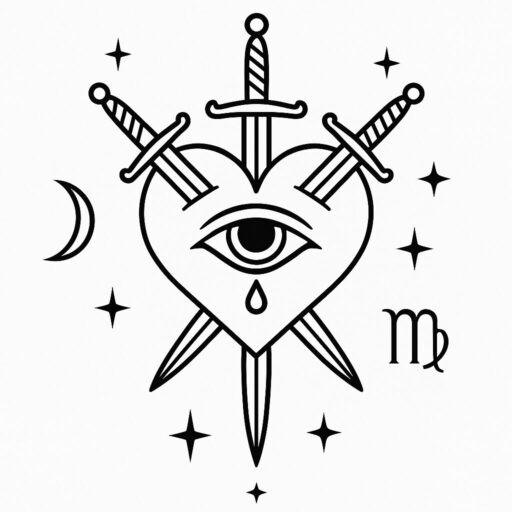
I keep pulling the same tarot card, the Eight of Swords. A prison of my own making. A figure blindfolded, yet surrounded by space that could be walked through. It makes me wonder whether being stuck is sometimes less about the walls around us and more about the moment we are ready to see a way out.
Groundhog Day endures because people have always needed a way to mark the turning of winter toward spring. In Punxsutawney, the ritual gathers a whole town around the fragile hope that the season will change. Yet the tradition reaches much further back than a single American town. Long before forecasts and festivals, communities across Europe observed the midpoint of winter in the celebration of Candlemas, when priests blessed candles and carried light into the lingering dark. In a season defined by cold and scarcity, light itself became a promise that winter would not last forever.
Among German communities, the day was tied to watching animals for signs of the coming season, often the hedgehog emerging from its burrow. When German settlers arrived in Pennsylvania and found no hedgehogs waiting for them, the groundhog took its place, and the old ritual adapted to a new land. These settlers are my direct ancestors, Pennsylvania Dutch and Celtic Scottish people shaped by long winters, close watching of the earth, and faith carried quietly through the dark. Winter, for them, was never just a season on a calendar, but something endured in the body and read in the living world. I imagine them searching, as I do now, for the first small signs that the earth was softening and light was beginning to return.
Every year, I find myself searching for the first daffodil stems pushing through the cold earth. Not casually, but almost ritualistically. I look along sidewalks, near mailboxes, at the edges of yards still hardened by frost. I search for that first impossible green breaking through winter’s silence. Sometimes a daffodil rises too early and meets another freeze. Yet it endures. It waits. And when the moment is right, it blooms anyway. In this quiet searching, I feel closest to those who came before me, watching the same earth, waiting for the same return of light.
I am not the daffodil, not yet. I am closer to the groundhog, still drawn toward hibernation, still reluctant to step out of the safety of the dark. Some days I barely want to leave my bedroom, let alone the house, as if staying hidden might keep the world from reaching me. And yet, even underground, something in me knows the season is changing. The slow work of becoming has begun, whether I am ready or not.
Since October, my inner world has been filled with intuition, prayer, and the quiet, unsettling language of spirit. Some moments feel comforting. Others feel frightening. Yet all of it keeps pointing toward the same truth I resist. Life is unfolding now. Not after fear ends. Not after the world repairs itself. Not after tomorrow finally feels safe.
I keep waiting for permission to live again, as if the world itself must heal before I am allowed to begin. But the seasons do not work that way. The groundhog rises before the thaw. The daffodil pushes upward through frost. Safety has already found me in small, quiet ways, yet beyond the walls of my home the world still trembles with suffering. And somewhere inside that tension, between shelter and chaos, something in me is slowly learning that becoming does not wait for certainty.
And yet the quiet thaw within me does not change the season outside.
The world still trembles with grief.
Still waits for mercy.
Still feels suspended in a winter that refuses to end.
I feel the dissonance of being both safe and not safe. Grateful and ashamed. Deeply loved while others suffer. It carries the quiet weight of survivor’s guilt, not of the body but of the spirit. I have food, shelter, and kindness in my home, and still I lie awake wondering how to live an ordinary life honestly, how to remain authentic in my values in a world where truth itself can feel dangerous to name.
In the middle of that tension, between private safety and public sorrow, I find myself thinking again about Phil. Not the comedy of the story, but the question hidden inside it. The question that finally changes him.
What would you do if there were no tomorrow?
If nothing you did seemed to matter?
If you were forced to remain in one place while the same story repeated around you?
Phil’s answer is simple, though not easy. He stops trying to escape the day and begins living fully inside it. Perhaps that is the invitation before me as well. Not to wait for spring. Not to wait for permission. Not to wait for the world to become bearable. But to create something beautiful even here, in the middle of winter.

This reflection is only a beginning, because the path ahead leads toward another story about voice, silence, and the masks we wear in order to survive. In Maya Angelou’s I Know Why the Caged Bird Sings, the struggle is not only to endure suffering, but to reclaim the freedom to speak and to be fully seen.
Soon, on or around February 15, I will be opening a small live gathering to listen more deeply for what freedom, truth, and unmasking might mean for us now, guided by the wisdom of Maya Angelou and the enduring voice of I Know Why the Caged Bird Sings.
If winter teaches us how to wait, perhaps the caged bird teaches us how to sing again.

Kelly Stanchfield is an artist, candle maker, and intuitive storyteller whose work lives at the intersection of scent, memory, and spiritual renewal. Drawing on Celtic, Scottish, and Pennsylvania Dutch roots, she creates art and writing that honor ritual, resilience, and the quiet work of transformation. Her creative practice is devoted to helping others find light beneath the ice.